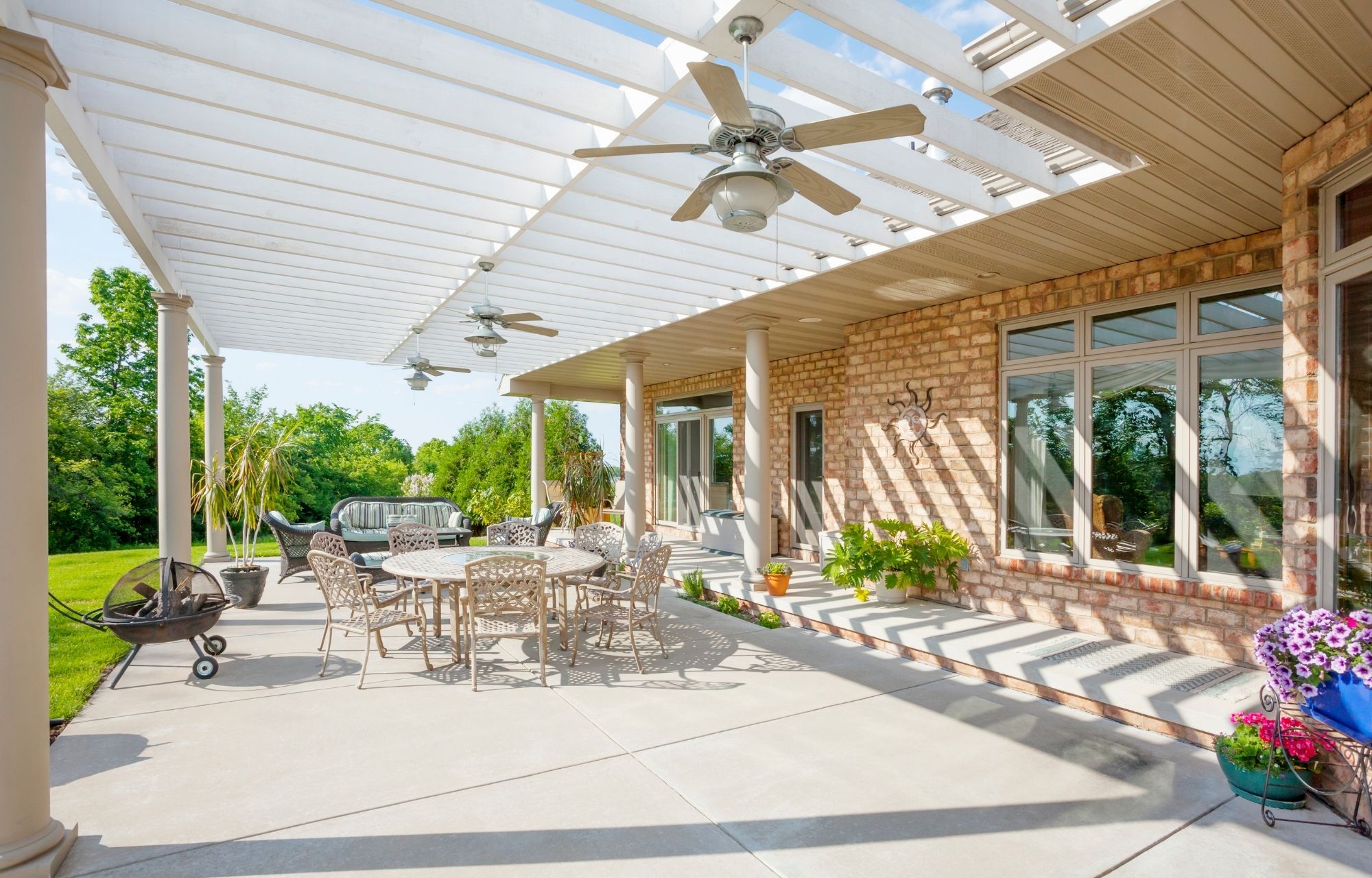
If you want to install outdoor ceiling fans in Sydney, you need ceiling fans designed and approved for outdoor conditions. Standard indoor ceiling fans are not designed or approved for outdoor exposure. To choose the right model, check the manufacturer’s environmental ratings, confirm how much moisture the unit can handle, evaluate materials for corrosion resistance, and choose airflow suited to your space’s size and layout. At Home Fires, we help Sydney homeowners balance varied coastal and inland conditions, from managing coastal salt exposure in the eastern suburbs to selecting effective airflow for hot summer afternoons in Western Sydney.
What Separates an Outdoor-Rated Fan From an Indoor Model?
Before choosing an outdoor ceiling fan, compare these six essential features to make sure the model suits your alfresco layout and environmental exposure:
- Ingress Protection (IP) rating
- Why it matters: Confirms dust and moisture resistance (such as IPX4 for splashes or IPX5 for water jets), though you should always verify the manufacturer’s specific advice for exposed or direct-rain locations.
- Blade and housing materials
- Why it matters: Helps improve resistance to moisture and corrosion, with grade 316 stainless steel often preferred for coastal environments and UV-stabilised ABS suited to many outdoor applications.
- Airflow capacity
- Why it matters: Measures total air volume moved, which works alongside blade design, fan diameter, and your patio size to keep the area comfortable.
- Motor type (AC vs. DC)
- Why it matters: Influences energy use, operating noise, and speed settings. DC motors are generally more efficient with wider control options, while AC motors cost less upfront.
- Mounting and clearance requirements
- Why it matters: Ensures solid structural support and safe spacing, keeping blades at least 2.1 m above the floor and clear of surrounding walls, beams, or obstructions per the manufacturer’s guidelines.
Standard indoor living rooms have sealed walls and relatively stable humidity. In contrast, outdoor covered entertaining areas face shifting moisture levels, temperature swings, and wind-driven rain. Installing an indoor fan on an open patio exposes delicate internal components to conditions they were never engineered to handle.
Outdoor suitability depends on the manufacturer’s specified environmental protection, materials, and approved installation conditions. Exterior models are engineered with components designed to withstand outdoor humidity and ambient dampness, but the exact level of protection varies by model and manufacturer.
Blades also make a significant difference. Untreated timber blades absorb moisture from the air, which can cause them to swell, warp, or deteriorate over time. Synthetic materials like ABS polymer or treated aluminium offer dependable alternatives, provided the specific product is approved for the intended outdoor application.
A solid pergola roof shields fittings from vertical rainfall, but it does not stop wind-driven mist or rising night humidity. If an installation location is exposed to splashing water or direct weather, select a unit specifically approved for those exposure levels and install it strictly according to the manufacturer’s instructions. Choosing a fan suited to the installation environment helps support reliable performance and durability across every season.
How IP Ratings Determine Where Your Outdoor Fan Can Be Installed
Ingress Protection (IP) ratings define how well an electrical enclosure resists the entry of solid objects and liquids under standardised laboratory test conditions. The first digit grades defence against dust and solid objects on a scale from 0 to 6. The second digit rates protection against water ingress on a scale from 0 to 9, with additional classifications for specialised water exposure. Where an “X” replaces a number, it simply means that specific characteristic has not been tested or specified, rather than indicating zero protection.
An IP rating describes enclosure protection under defined testing conditions. It does not, by itself, establish whether a complete ceiling fan is approved for a particular outdoor installation, nor does it measure long-term resistance to coastal salt air.
For example, an IPX4 rating indicates protection against splashing water from any direction, while an IPX5 rating indicates protection against low-pressure water jets. However, these ratings serve as testing benchmarks rather than universal installation approvals. Neither rating alone makes a fan an unconditionally waterproof ceiling fan in Sydney.
Check the manufacturer’s published technical specifications and supporting test documentation rather than relying on promotional terms like “all-weather”. Reviewing verified outdoor ceiling fans in Sydney ensures the model you choose matches your outdoor area’s exposure level.
Understanding Exposure: Covered Alfresco Spaces vs Direct Weather
Different outdoor locations present very different levels of environmental exposure. Rather than relying on generalised labels, the deciding factor must always be the manufacturer’s approved installation conditions and documented environmental ratings.
Covered alfresco spaces with solid, permanent roofs protect fittings from vertical rain, though they still subject fixtures to ambient dampness and condensation. Fans approved for these sheltered positions handle indirect moisture, but direct water spray or driving rain can compromise an unrated housing.
Where an installation point sits beneath an open-slatted pergola or near the edge of a roofline where rain can blow in, verify that the fan is certified for direct water exposure. Review the product documentation to confirm whether the model is approved for exposed locations, and follow the manufacturer’s cleaning instructions rather than assuming any outdoor fixture can be washed down with a hose.
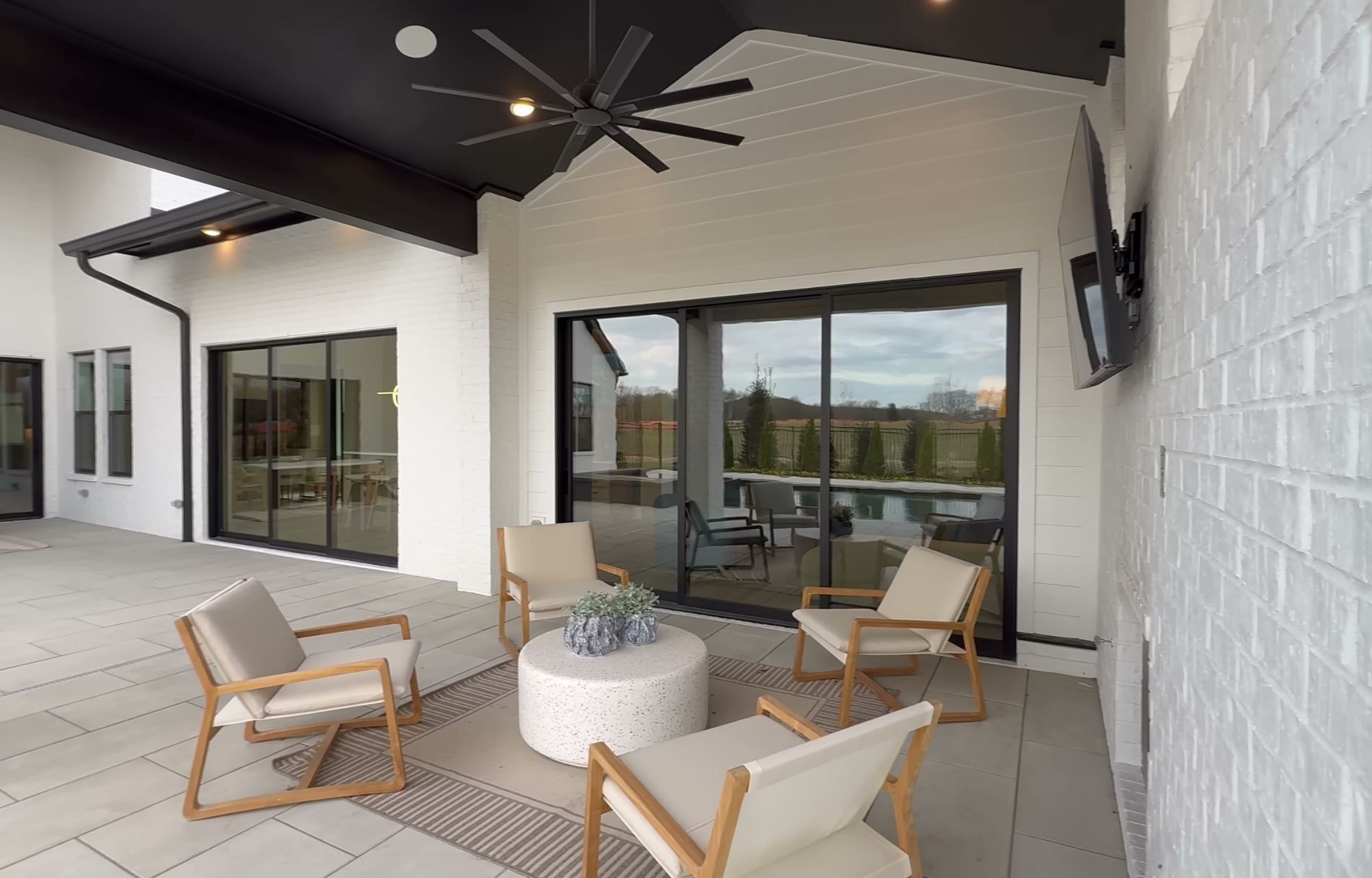
Why Sydney’s Coastal and Inland Conditions Demand Different Fan Materials
Airborne salt can accelerate corrosion, particularly on exposed metal surfaces, hardware, and fasteners across coastal Sydney suburbs like the Northern Beaches and Cronulla. The speed and severity of deterioration depend on how close the property is to the ocean, local wind patterns, the amount of structural shelter, and how often it is maintained.
Inland areas across Western Sydney experience prolonged periods of dry summer heat and intense sunlight. Prolonged UV exposure can cause some plastics and surface coatings to fade, become brittle, or deteriorate over time, depending on their formulation and UV resistance.
To protect your fixtures across all Sydney regions, follow the manufacturer’s maintenance instructions. Regularly wipe with a soft, damp cloth and fresh water to remove surface salt deposits, dust, and grime before pitting starts, and follow any safety directions about moisture around electrical components.
Which Materials Hold Up Best Against Salt Air and Moisture?
Selecting suitable materials helps protect your alfresco fittings against premature wear. To compare the common options used in outdoor ceiling fans, review the summary below:
| Material | Main Advantage | Considerations |
| ABS polymer | Resists moisture absorption and does not warp in the same way as untreated timber | Check product-specific UV resistance and temperature limits |
| Grade 316 stainless steel | Generally better chloride corrosion resistance than grade 304 | Requires regular cleaning; not completely immune to tea staining |
| Powder-coated aluminium | Lightweight and naturally corrosion-resistant, with additional surface protection from powder coating | Coating scratches and exposed fasteners can accelerate corrosion |
| Exterior-treated timber | Natural, architectural aesthetic | Suitability depends on the manufacturer’s approval, sealing coats, and maintenance |
ABS polymer blades resist moisture absorption and do not warp like untreated timber. Airflow performance depends on the complete fan design, including blade geometry, motor efficiency, and running speed, while long-term durability depends on the polymer’s specific UV stability.
Grade 316 stainless steel is a commonly preferred option for improved resistance to chloride corrosion in coastal environments. However, its overall durability still relies on regular maintenance and reasonable shelter. Even marine-grade steel requires routine freshwater cleaning to prevent cosmetic tea staining over time.
Powder-coated aluminium provides a lightweight, corrosion-resistant housing option for outdoor areas. The powder finish adds an effective layer of defence, though deep surface scratches or exposed unsealed fasteners can allow oxidation to take hold.
Exterior-treated timber gives covered verandas a warm architectural finish, but its outdoor suitability depends entirely on the manufacturer’s approval. These blades require adherence to the maker’s specified surface treatments and maintenance schedule to prevent moisture penetration.
How Blade Size and Airflow Affect Comfort in Open Alfresco Areas
Open alfresco areas have fewer physical barriers to contain airflow than enclosed rooms, meaning natural breezes can quickly disperse cooling drafts. Because of this, fan positioning, blade span, and airflow distribution become especially important when planning your layout.
Ceiling fans do not lower the actual room temperature. Instead, airflow across the skin supports the body’s natural cooling mechanisms through evaporation. As Australian Government guidance on energy-efficient cooling highlights, airflow can make occupants feel approximately 3°C cooler without changing the actual air temperature, provided the breeze directly reaches the seating zone.
When evaluating fan models, check the published airflow volume in cubic metres per hour (m³/h) or cubic feet per minute (CFM). Compare figures tested and reported under comparable operating conditions rather than relying on motor wattage alone, as motor power does not directly indicate airflow output.
Match Blade Span to Your Patio’s Size and Layout
Choosing an appropriate fan size depends on the manufacturer’s recommended room coverage, ceiling height, and airflow output. To help you plan your alfresco layout, keep these practical points in mind:
- Smaller outdoor verandas: A compact blade sweep provides comfortable air circulation without overwhelming limited floor space.
- Medium alfresco dining areas: Mid-sized blade spans help distribute air evenly across dining tables and surrounding seating.
- Expansive outdoor living areas: Larger blade spans, or multiple units positioned across separate zones, help maintain balanced air movement across both dining and lounge areas.
Factor in your furniture layout, high-traffic walkways, and cooking appliances. Position fans so their airflow does not interfere with smoke movement around barbecues and outdoor kitchens.
AC vs DC Outdoor Fans: What Changes in Performance and Energy Use?
Alternating current (AC) and direct current (DC) motors provide distinct operational characteristics, control options, and energy profiles for outdoor living spaces.
DC motors often offer more speed settings and finer adjustment than standard AC motors, depending on the specific model. While standard AC fans typically operate across fixed baseline speeds, many DC designs give you greater control to fine-tune air movement from a gentle background drift to higher circulation on humid afternoons. Many DC models are also engineered for reduced energy consumption, though actual power savings depend on the specific motor and operating speeds.
Some ceiling fans also include a reversible motor function operated by a switch or remote control. In suitable indoor or fully enclosed areas, reversing blade rotation can help redistribute warm air trapped near the ceiling. In open alfresco areas, the practical benefit of reverse mode depends heavily on your roof structure, surrounding walls, and local wind conditions.
Because outdoor electronics face fluctuating temperatures and humidity, verify that the motor housing and remote receiver are rated for the environment. Exploring quality DC ceiling fans lets you evaluate models designed for quiet operation and efficient performance during the warmer months.
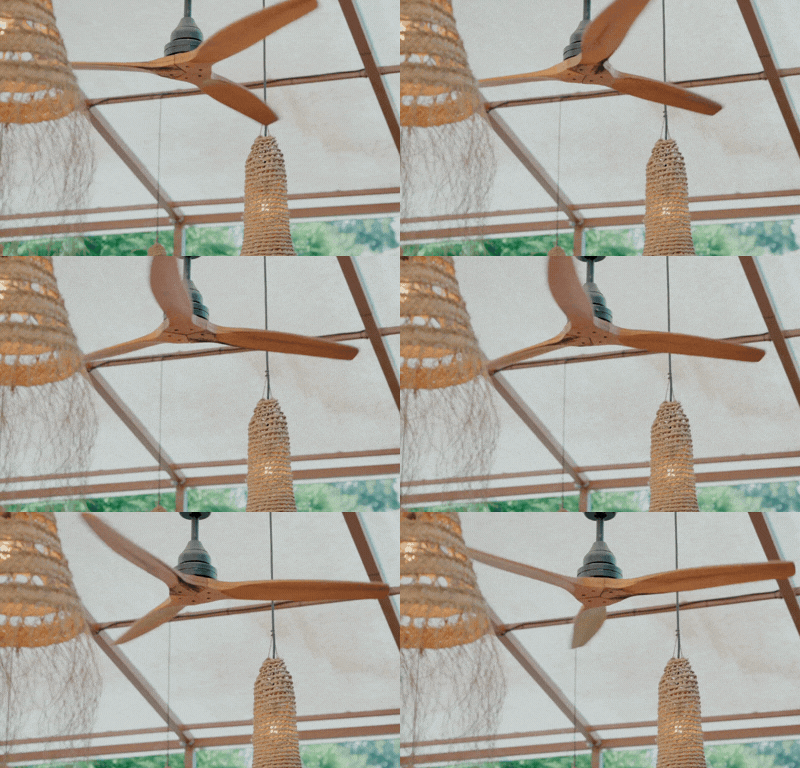
When Does an Integrated Light Make Sense for Your Alfresco?
Choosing a ceiling fan with built-in illumination can simplify roof layouts where ceiling junction points are limited.
An integrated light combines air circulation and general illumination at a single mounting point, which can reduce the need for separate exterior lighting fixtures. This creates a clean ceiling line across timber lining boards, insulated panels, or painted finishes.
Make sure the light fitting carries appropriate environmental protection for the intended installation location to guard against moisture and insect entry. Diffusers designed for exterior use help keep the light output clean and prevent internal debris from accumulating over time.
Lighting colour temperature is largely a matter of personal preference and patio function. Warm white (around 3000K) suits relaxed dining and lounge settings, while neutral or cool white (around 4000K) provides functional visibility for food preparation areas. Choosing adaptable ceiling fans with lights helps keep your alfresco area comfortable and well lit into the evening.
Get the Mounting Height and Electrical Requirements Right
Safe and reliable operation requires careful attention to structural support, overhead clearances, and electrical safety standards before installation starts.
Under NSW electrical safety regulations, all fixed electrical wiring work must be carried out by an appropriately licensed electrician. The installation must comply with applicable electrical safety requirements and the AS/NZS 3000 Wiring Rules, as set out by Standards Australia. Never attempt DIY work on fixed 240V wiring.
The mounting structure, roof battens, or crossbeams must be suitable for the fan’s weight and dynamic operating forces. A running fan produces continuous motion, which requires a secure structural timber fixing point in accordance with the manufacturer’s technical instructions rather than standard plasterboard fixings.
Blade clearance must also be checked against manufacturer instructions and applicable safety requirements. Many Australian ceiling fan installation manuals specify a minimum clearance of 2.1 metres between the floor and the lowest point of the fan blades. Have your licensed electrician verify exact ceiling heights and clearances from the finished deck or patio surface.
What to Check Before Installing on a Pergola or Raked Ceiling
Angled, cathedral, or pitched alfresco ceilings require compatible mounting hardware to ensure the fan hangs vertically and operates smoothly:
- Raked ceiling mounting canopies: Sloping ceilings require a mounting bracket designed to articulate to the pitch of your roof, subject to the manufacturer’s specified angle limits.
- Downrod extensions: A suitable downrod extension lowers the fan assembly to maintain necessary blade clearance from sloping roof lines and adjacent beams, in line with the manufacturer’s specifications.
- Protected electrical connections: Electrical wiring and connections must be appropriately protected for the installation environment and comply with all applicable wiring requirements.
Use This Checklist Before Buying an Outdoor Ceiling Fan
Before purchasing an outdoor fan, work through these practical checkpoints to ensure the fixture suits your space and lifestyle:
- Measure patio dimensions and ceiling height: Verify your space has adequate overhead blade clearance, and choose a blade span suited to the area.
- Establish your exposure level: Determine whether the fan will sit under a fully sheltered roof or an open structure exposed to wind-driven moisture.
- Review housing and blade materials: Check that materials like ABS polymer, powder-coated aluminium, or grade 316 stainless steel are explicitly approved by the manufacturer for your environmental conditions.
- Compare motor options: Evaluate AC and DC models based on speed options, control preferences, and manufacturer specifications.
- Check integrated lighting: Determine whether you need overhead illumination and verify that the light fitting carries suitable environmental protection.
- Verify manufacturer environmental classifications: Confirm the published IP rating and approved installation conditions match your patio layout.
- Confirm compliant installation: Ensure your ceiling structure provides adequate support and arrange for a licensed electrician to complete the wiring.
To explore options suited to your outdoor living space, browse our range of outdoor ceiling fans and their specifications across the complete Home Fires collection.
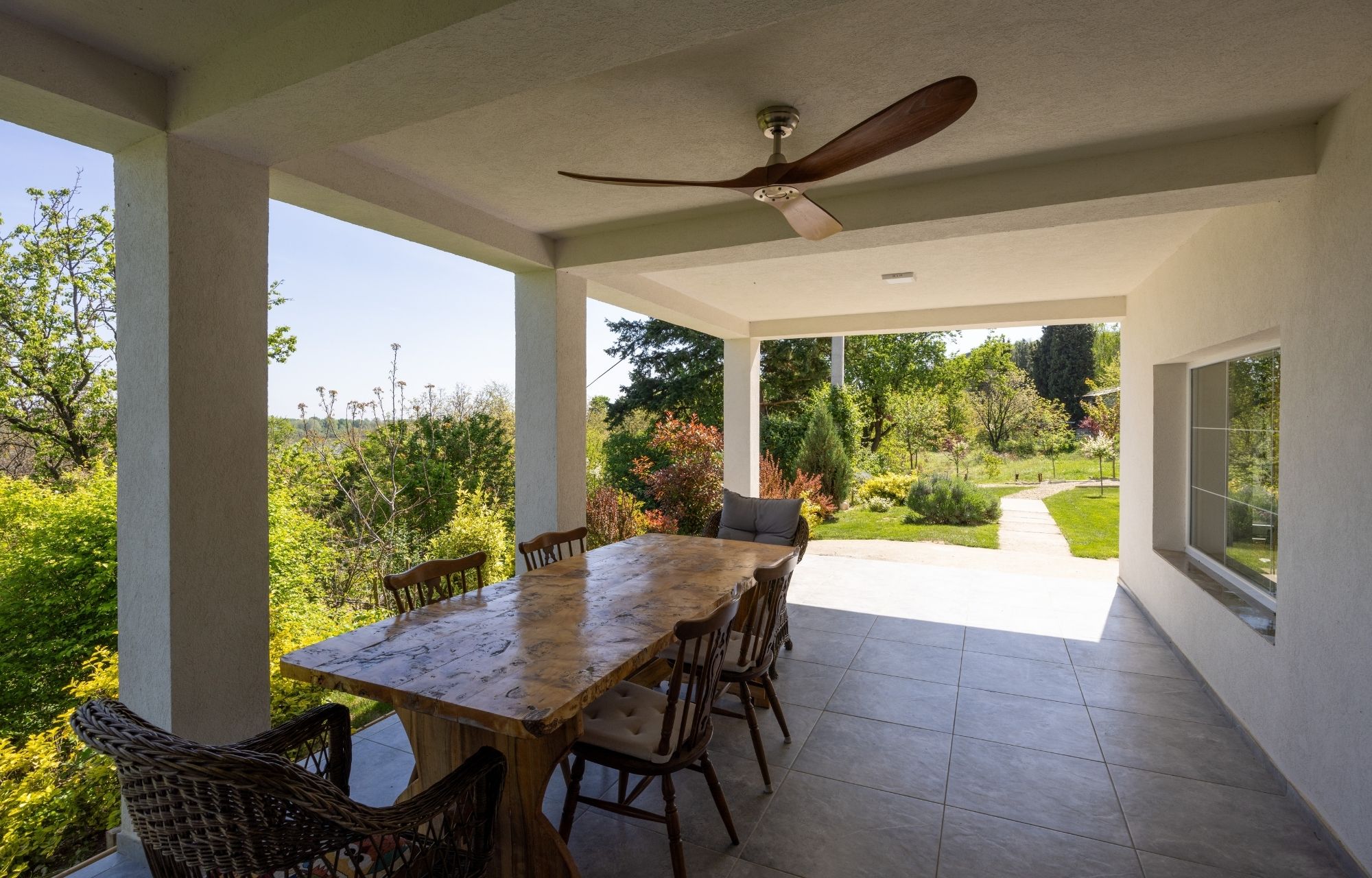
Find an Outdoor Ceiling Fan That Suits Your Alfresco
Selecting a ceiling fan approved for your specific outdoor environment helps prevent premature wear, surface corrosion, and component failure. View our range of outdoor ceiling fans and their specifications online, or visit our Minto and Casula showrooms to discuss your space with our team. You can also speak with the Home Fires team about your alfresco to find a solution tailored to your home’s layout and local conditions.
Frequently Asked Questions
Can any ceiling fan be installed in a covered outdoor patio?
Standard indoor ceiling fans are not built for outdoor conditions. Ambient humidity and temperature changes can damage unprotected blade materials and internal electronics. Any outdoor installation requires a fan specifically approved by the manufacturer for the intended outdoor conditions and the space’s moisture exposure.
What IP rating should I look for in an alfresco ceiling fan?
The required IP rating depends on the fan’s approved installation conditions and the manufacturer’s documentation. An IP rating indicates the level of protection against solid objects and water under specific test conditions, such as splashing water (IPX4) or water jets (IPX5). Check the product’s technical specifications to confirm it is approved for your patio’s exposure.
Are coastal-rated ceiling fans necessary in Sydney?
Airborne salt in Sydney’s coastal suburbs can accelerate corrosion on metal components and exposed fixings. While no fixture is completely immune to environmental wear, choosing corrosion-resistant materials like grade 316 stainless steel or quality powder-coated aluminium provides better protection against coastal conditions. Following the manufacturer’s freshwater cleaning instructions remains essential for preventing salt build-up.
Do outdoor ceiling fans actually lower the temperature?
Ceiling fans do not change the actual air temperature. They improve perceived comfort by circulating air across the skin, which assists the body’s natural cooling processes. Australian Government energy guidance notes that direct airflow can make occupants feel approximately 3°C cooler while the fan is operating.
Can outdoor ceiling fans operate during rain?
Whether an outdoor ceiling fan can run during rain depends on the product’s approved installation conditions and the manufacturer’s instructions. A fan approved only for sheltered outdoor areas must be protected from direct water spray, whereas models tested and approved for wet environments can handle greater moisture exposure. Always check product documentation before operation.
How high should an outdoor ceiling fan be mounted?
Check ceiling fan mounting height against applicable Australian safety requirements and the manufacturer’s installation manual. Manufacturer instructions commonly specify at least 2.1 metres between the floor and the lowest point of the blades. Always have a licensed electrician verify ceiling clearances and structural support before fitting the unit.